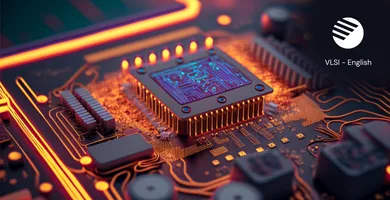
Explore Very Large Scale Integration (VLSI) with our comprehensive course in digital electronics. From mastering number systems and Boolean algebra to hands-on labs implementing gates, adders, and flip-flops, our program ensures a strong foundation in VLSI design. Learn to analyse sequential circuits, design finite state machines, and explore specialised counters. The VLSI course blends theory with practical labs, empowering you to apply knowledge in real-world scenarios. Elevate your skills in VLSI design and digital systems—enrol now for expert-led self-paced classes.
Explore Very Large Scale Integration (VLSI) with our comprehensive course in digital electronics. From mastering number systems and Boolean algebra to hands-on labs implementing gates, adders, and flip-flops, our program ensures a strong foundation in VLSI design. Learn to analyse sequential circuits, design finite state machines, and explore specialised counters. The VLSI course blends theory with practical labs, empowering you to apply knowledge in real-world scenarios. Elevate your skills in VLSI design and digital systems—enrol now for expert-led self-paced classes.
Starting with a solid grasp of number systems and codes, you’ll progress through hands-on labs, mastering fundamental digital electronics concepts. Unlock the intricacies of Boolean algebra, design and implement combinational logic, and delve into the nuances of sequential circuits. Gradually, you’ll gain expertise in crafting integrated circuits and learning to design complex systems with precision. The course not only imparts theoretical wisdom but ensures practical skill development, allowing you to confidently apply your knowledge in real-world scenarios. By the course’s conclusion, you’ll possess a robust foundation in VLSI design, enabling you to spearhead innovative projects and excel in the dynamic field of digital systems.
Starting with a solid grasp of number systems and codes, you’ll progress through hands-on labs, mastering fundamental digital electronics concepts. Unlock the intricacies of Boolean algebra, design and implement combinational logic, and delve into the nuances of sequential circuits. Gradually, you’ll gain expertise in crafting integrated circuits and learning to design complex systems with precision. The course not only imparts theoretical wisdom but ensures practical skill development, allowing you to confidently apply your knowledge in real-world scenarios. By the course’s conclusion, you’ll possess a robust foundation in VLSI design, enabling you to spearhead innovative projects and excel in the dynamic field of digital systems.
Key Features:
Globally Recognised Certification
100% online and Self-paced learning
Full lifetime access to all content
Access to 4 Gamified Practise Platforms
Dedicated Forum Support to clear all your doubts
7 Days refund Policy
Topics you will learn
Beginner Module
Course Overview
Number system (Decimal, binary, octal, hexadecimal)
Radix and diminished radix complement
Signed and unsigned number
Lab 0: Introduction to digital electronics lab
Lab 1: LED glow circuit
AND,OR,NOT,NAND,NOR,XOR,XNOR gates
Lab 1: Implementation of AND gate
Theorems and properties of Boolean Algebra
Boolean functions
Minterms and maxterms
Dual of a function
2-variable and 3-variable Karnaugh map
4-variable Karnaugh map
Prime implicants and essential prime implicants
5-variable Karnaugh map
Combinational logic analysis and design procedure
Adders - Half adder, full adder, 4-bit binary adder
Adders - Carry lookahead adder, BCD adder
Lab 3: Implementation of full adder
Subtractor
Overflow in adder-subtractor
Binary multiplieer
Magnitude comparator
Decoders
Lab 4: Implementation of decoder
Encoders
Multiplexers
Tri-state gates and demultiplexers
Latches
Latches continued
D flip-flop
JK flip-flop and T flip-flop
Difference between latches and flip-flops
Sequential circuit analysis using D flip-flop
Sequential circuit analysis using JK flip-flop
Sequential circuit analysis using T flip-flop
Finite state machines
Lab 5: Implementation of D flip-flop
Design of pattern detector using D-flip-flop
Design of pattern detector using JK-flip-flop
Design of 3-bit counter using T flip-flop
Register with parallel load
Shift registers
Serial transfer
Serial adder
4-bit up-down binary counter
BCD counter
Special counters - Ring and Johnson counter
Course Offerings
Certificate you will get
IITM Pravartak certified Python certification.
Certificates are globally recognized & they upgrade your programming profile.
Certificates are generated after the completion of course.
After this Course
Design intricate integrated circuits with precision.
Implement and optimize Boolean logic in digital systems.
Analyze and troubleshoot sequential circuits confidently.
Craft advanced digital systems using various flipflops and gates.
Develop expertise in code conversion and combinational logic design.
Spearheaded innovative projects in the dynamic field of VLSI design.
Pre Requsites
Basic understanding of digital electronics fundamentals.
Familiarity with number systems, codes, and basic logic gates.
Willingness to engage in handson labs for practical application
Course is for
Freshers
Professionals
Students
FAQ's
What is the overview of GUVI’s VLSI certification course?
GUVI’s VLSI certification course provides a comprehensive understanding of digital electronics, covering number systems, Boolean algebra, sequential circuits, and essential components of digital systems. Handson labs complement theoretical learning, ensuring a robust foundation in VLSI design.
Why learn the VLSI course?
Learning the VLSI course equips individuals with the expertise to design integrated circuits, analyze sequential circuits, and apply digital electronics concepts in realworld scenarios. It opens doors to exciting opportunities in the dynamic field of VLSI design and digital systems.
Why choose GUVI for learning the VLSI design course?
GUVI stands out for its blend of theoretical knowledge and practical application. The course offers handson labs, ensuring a holistic learning experience. With industryrelevant content and expert guidance, GUVI prepares learners for success in VLSI design.
What are the benefits of learning VLSI certification?
VLSI certification brings numerous benefits, including expertise in digital electronics, enhanced problemsolving skills, and the ability to design intricate integrated circuits. Certified individuals are wellprepared for challenging roles in VLSI design, contributing to technological advancements.
Is the VLSI course difficult to learn?
While the VLSI online course covers complex topics, GUVI's pedagogy, handson labs, and expert guidance make the learning process accessible and engaging. The course is designed to progressively build knowledge, ensuring learners grasp challenging concepts effectively.
How long does it take to learn VLSI?
The duration to master VLSI depends on the individual learning pace and prior knowledge. GUVI's structured course allows learners to progress gradually, typically taking a few months to acquire a solid foundation in VLSI design.
How much does the VLSI certification Course Cost?
For detailed information on course costs and available payment plans, please visit GUVI's official website or contact their support team. Costs may vary based on factors such as course duration and additional features offered.